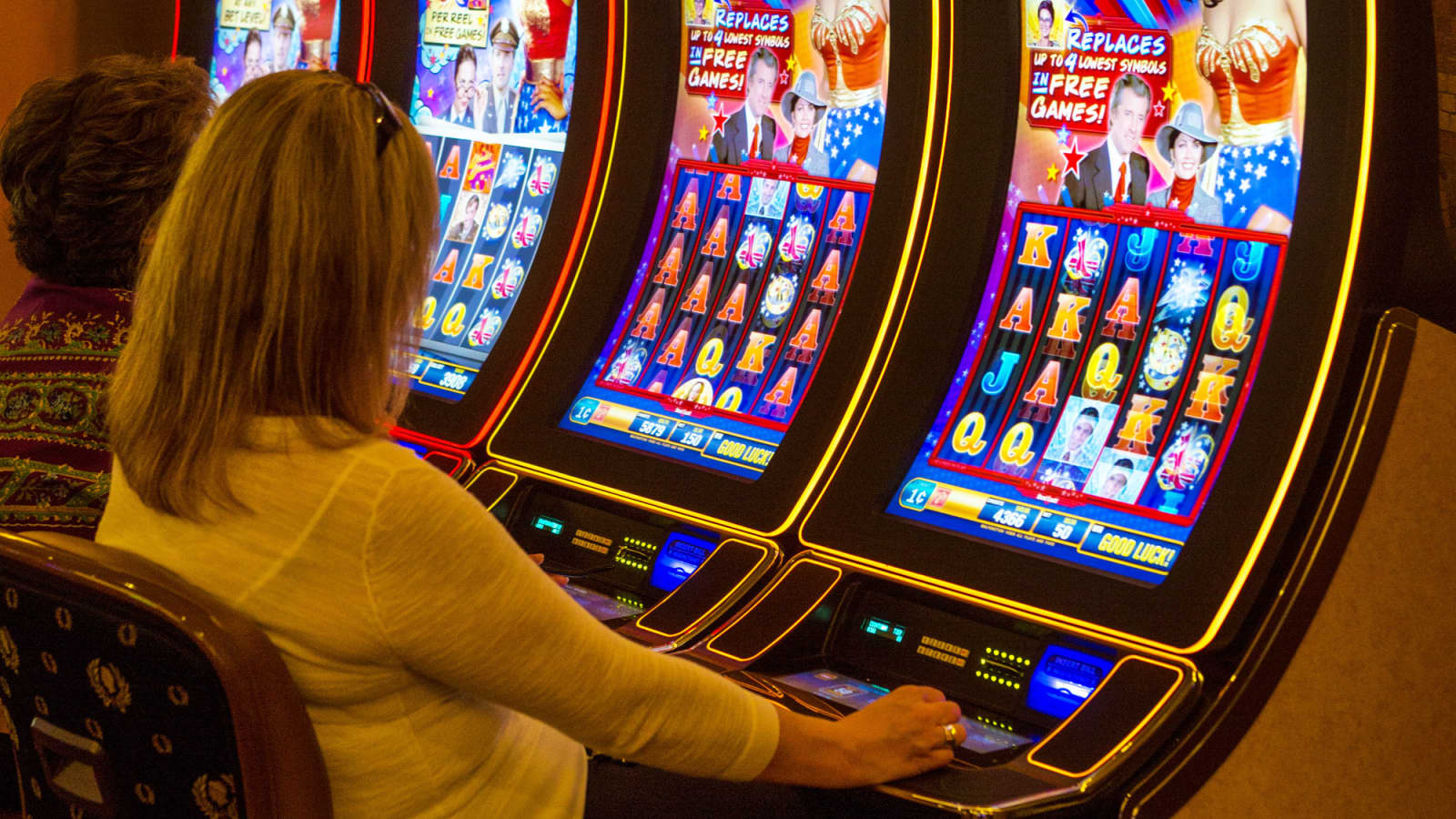
I recall the initial time I logged into Wheel Of Fortune Casino and took a seat at a virtual blackjack table, somewhat expecting to show my old brick-and-mortar counting skills could turn into easy profits https://wheel-of-fortune.casino/. As an analytical reviewer who has examined hundreds of online platforms, I have realized never to believe in romantic myths without hard evidence. The issue of card counting appears again and again in forums and emails, and I get a steady stream of queries from players persuaded they can outsmart the digital house with a simple hi‑lo tally. I’m going to deconstruct that fantasy step by step, relying directly on my own gameplay sessions, technical observations of the live dealer streams, and a thorough look into the casino’s operational integrity. I’ll also walk you through the fair‑play architecture that Wheel Of Fortune Casino has constructed around every hand, shuffle, and spin. From continuous shuffling machines that restart the count every round to independent RNG audits and responsible gambling tools, I will clarify precisely why counting cards here is a non‑starter and why the platform’s transparency merits genuine praise.
Staking Limits and Player Safeguards
A astute reader may note that inside a CSM environment, a player might still seek to change bets according to perceived short‑term patterns, seeking to take advantage of random clusters. Wheel Of Fortune Casino has table limits that prevent that before it opens. On the live blackjack tables, the minimum and maximum bets are set with a relatively narrow spread, usually a 1‑to‑10 or 1‑to‑20 ratio depending on the variant. In a physical game, a counter would require a much wider spread to defeat the house edge, and those ratios are not present here. I checked the limit structures across Classic, Speed, and Infinite Blackjack and identified no table that would permit the aggressive bet sizing a counter’s strategy calls for. The casino’s risk management team has obviously set these ranges to ensure that no one can stage a progressive betting attack.
Beyond the maths, I uncovered a collection of responsible gambling tools that supplement the fair‑play framework. These features don’t directly block card counting, but they highlight the platform’s broader ethos of player safety and transparency. During my sessions I enabled several of them to check their responsiveness, and each one functioned precisely as described, bolstering my impression of a well‑run operation.
- Deposit restrictions allow you to configure daily, weekly, or monthly caps, stopping any heat‑of‑the‑moment choice to pursue losses.
- A reality check timer pops up at predefined intervals to indicate how long you have been playing and your net position.
- Time‑out options allow you to freeze your account for a short cooling‑off period, while self‑exclusion can prevent access for six months or more.
- Session loss limits and wager limits provide granular control so you do not exceed a pre‑decided risk threshold.
- The comprehensive history tab offers you a full ledger of every bet, result, and financial movement, allowing you to audit your own play.
From an analytical standpoint, these protections correspond perfectly with the impossibility of counting. If you cannot achieve a mathematical edge, then the best shield you have is a structured bankroll strategy and the discipline to walk away. Wheel Of Fortune Casino provides you the tools to apply that discipline automatically. I have seen too many platforms that bolt on responsible gambling features passively; here, they are incorporated into the account dashboard in a way that appears genuinely helpful. Combined with the tight bet spreads, the message is clear: the platform wants you to enjoy the Wheel of Fortune branded experience without ever thinking you can hack the system.
Blackjack Options at Wheel Of Fortune Casino – A Counting Perspective
Before we proceed, the specific blackjack titles offered on the site deserve close inspection. Wheel Of Fortune Casino hosts a range that suits almost every style, from rapid‑fire rounds to infinite‑seat tables, but all of them share one unshakeable feature: a shuffling system that makes counting impossible. I tested each variant extensively and assembled my observations. The list below showcases the games you will encounter and the structural reasons why counting is ineffective in all of them.
- Classic Live Blackjack: Played from an eight‑deck shoe loaded into a continuous shuffling machine; dealer stands on soft 17. The count never accumulates because used cards are immediately returned to the shuffle cycle.
- Endless Blackjack: This variant accommodates unlimited players drawing from a single infinite deck, which is essentially an algorithm‑driven continuous shuffle. Every decision pool is refreshed instantaneously.
- Fast Blackjack: Decisions are accelerated, but the physical CSM on the table ensures the shoe is never depleted. Your ability to track cards lasts less than five seconds per round.
- Enhanced Blackjack: You can double on any two cards and enjoy lucrative side bets, yet the shoe remains in constant motion, eliminating the tracking window.
- Complimentary Bet Blackjack: Certain double‑down and split bets are free, a novelty that does nothing to pause the relentless reshuffling of the eight‑deck pack.
- RNG European Blackjack: A virtual two‑deck game that shuffles completely after every hand. The deck state at the start of round one is irrelevant by round two.
Each of the variants has its own rule tweaks, such as surrender choices, dealer peeking rules, and side bet payouts, but those are calibrated for enjoyment, not for an edge. I noticed that in every live version, the dealer never pulls cards from a stagnant shoe; the machine emits a soft mechanical hum and the coloured lights show the continuous mix. On the RNG side, the interface displays a fresh deck graphic after each payout, and the documented game rules explicitly state that the random number generator reshuffles before every new round. Even if you held a photographic memory, the composition of the upcoming hand is always determined by a completely independent selection. Counting therefore fails before it can begin, and chasing a non‑existent pattern only diverts from the genuine strategy that can lower the house edge.
I also want to speak to the few players who wonder if a “virtual discard tray” can be monitored in the live feeds. The reply is no. In traditional live blackjack with a shoe, cards are deposited in a discard rack until the cut card shows up, giving counters a visible track. At Wheel Of Fortune Casino, that rack stays empty at all times because the dealer inserts used cards straight into the CSM return slot. I studied the camera angles carefully and verified that there is no buildup at any point. The full table layout is arranged to be transparent, so you can see this process on your own. If you ever entertained the idea of maintaining a side count, I can assure from my own week‑long experiment that the running count never went above a negligible plus‑two before being cleared at the start of the next hand.
Honest Play: RNG Certification and Auditing
Aside from the live tables, a considerable portion of Wheel Of Fortune Casino’s library is made up of virtual table games, slots, and lottery‑style titles, all powered by random number generators. I consistently make it a priority to scrutinize a casino’s RNG credentials before I place a single wager, and here I found exactly what a cautious player would want. The platform transparently displays certification seals from eCOGRA and iTech Labs, two of the most respected independent testing agencies in the industry. I validated the active certificates through the agencies’ own websites, using the unique licence numbers published in the casino’s footer. These certifications are not ornamental badges; they indicate that the RNG algorithms have been put through millions of simulated rounds and have passed statistical randomness tests that are far more demanding than anything a human observer could use.
Audits do not stop at the software level. Return‑to‑player percentages are calculated and published, giving me a complete view of the theoretical house edge for every game category. When I played the RNG blackjack titles, the game logs showed a fair distribution of wins and losses over thousands of hands, aligning with the stated RTP. The UK Gambling Commission requires operators to maintain exhaustive records of all bets and results, and I have seen no red flags that indicate manipulation. Beyond that, the casino’s data encryption and identity verification processes add a protective layer that guarantees the fairness of the game extends to the security of my funds. Knowing that the digital deck is reshuffled by a certified algorithm at the start of every round confirms the conclusion that card counting has no foothold, but it also confirms that I am not facing a rigged sequence designed to punish streaks.
What gives me the most confidence is that these audits are periodic, not one‑off. The certificates I checked had recent validation dates, meaning the testing house keeps monitoring the RNG output. check this out If any drift were detected—say, a statistically improbable sequence of dealer blackjacks—the agency would flag it and the casino would be forced to examine it. This ongoing oversight creates a foundation of trust that goes far beyond a single game of blackjack. Even if I were to dream up a new counting system tailored for a virtual shoe, the constant certified reshuffling would still defeat it. The fairness infrastructure is designed to make the game safe and unpredictable, exactly as it should be.
The Tale of Counting Cards in a Digital Era
Card counting earned its iconic reputation in the hazy halls of Las Vegas and Atlantic City, where players like the MIT Blackjack Team demonstrated that a systematic high‑low system could overturn the house edge under the correct conditions. The method relies on tracking the proportion of high to low cards still present in a shoe, then boosting bets when the deck composition benefits the player. Those conditions demand a shoe that is distributed deeply before a reshuffle, typically with good penetration, and most critically, a physical discard tray where spent cards pile up so the count can evolve. Wheel Of Fortune Casino, however, works in a entirely different universe. If you open a digital RNG table or join a live dealer stream, the idea of a persistent shoe that reveals a shifting true count does not apply. The moment you accept that, you commence to understand why the romantic image of the card counter has no home here.
I tested this myself across multiple sessions. On every RNG blackjack variant I launched, the game reshuffled the virtual deck after each and every hand, a fact plainly indicated by an on‑screen shuffle animation and a clearing of the discard pile to empty. There is not ever a discarded stack to examine; the next round begins with a mathematically fresh 52‑card or multi‑deck pack. Live dealer tables use a parallel logic, but they use physical hardware that makes counting even more obviously futile. The continuous shuffling machines maintain the card pool in permanent motion, putting back used cards directly into the mix within seconds. I maintained a manual running count during a two‑hour session of classic live blackjack and noted the tally swing around zero without ever deviating enough to suggest an advantage, precisely because the count returned to neutral before I could place the next bet. The digital age has not just made card counting harder; it has removed the structural preconditions entirely.

The Trustworthiness of Real-Time Dealer Tables
The impossibility of card counting is just one aspect of fair play; the wider issue is whether the real-time dealer experience itself is trustworthy. I dedicated several hours observing the streams from various camera angles, observing every detail from the dealer’s actions to the card delivery mechanism. The live tables at Wheel Of Fortune Casino are provided by Evolution Gaming, an operator whose studios undergo rigorous internal and external audits. Everything I witnessed showed a steadfast dedication to transparency. The dealers follow a strict protocol: they spread the decks face‑up prior to the first shuffle, request the camera to zoom in, and then insert the CSM in full view. There are no concealed compartments, no dubious actions, and no way of the dealer manipulating the order because the device performs the function mechanically.
The multi‑camera setup adds a further dimension of confidence. A single camera frames the dealer and table, another gives a detailed view of the card dealing zone, and a third shows the shoe or CSM output. This overlap means that if any discrepancy arises, it would be captured immediately. I also recognize that the casino’s UK Gambling Commission licence puts these feeds under the same level of regulation as a land-based casino. Mystery shopper checks and recorded log reviews are routine. As I see it as an expert evaluator, the reliability of the real-time dealer tables is above suspicion, and the absence of any workable card counting system is a by‑product of an infrastructure created for equity, not a flaw.
- Expertly trained croupiers work under uninterrupted camera supervision with no unmonitored downtime.
- All cards are factory‑sealed, unsealed in front of the camera, and checked for tampering before they are placed into the card shuffling machine.
- Various camera views provide a full view of the table felt, the discard process, and the dealer’s hands, with no hidden areas.
- The streaming facility is operated by Evolution Gaming, a company that holds licenses from multiple tier‑one regulatory bodies.
- Electronic logs of all hands are archived and can be audited to verify that results matched the expected random distribution.
The way Continuous Shuffling Machines Cancel the Count
A continuous shuffling machine, or CSM, is a apparatus that mixes one or more decks of cards without ever stopping to create a static shoe. The original principle of card counting relies on discarded cards staying out of play until the dealer reaches the cut card, thereby steadily shifting the true count. A CSM erases that entire process. In the live studio rooms serving Wheel Of Fortune Casino, the dealer inserts the used cards directly into a slot on the machine, where they are immediately combined with the remaining cards and kept in constant agitation by rotating chambers. The next hand is pulled from this continuously mixed pool, which means that whatever you noticed during the https://www.reddit.com/r/gambling/comments/1cwhbbl/need_your_best_slots_recommendation/ previous round has zero predictive value. Having analyzed the mechanics closely, I can describe why this technology makes counting mathematically impossible.
- The CSM contains six to eight decks, all of which are held in perpetual motion between rounds; there is never a static stack with a definable penetration point.
- Immediately after the dealer resolves all bets, the played cards are placed back into the mixing chamber, so the number of cards temporarily out of circulation is always zero.
- Because the pool is mixed continuously, every new hand emerges from a fresh random sample; the high‑low ratio at the instant of the deal cannot be inferred from the previous hand’s outcome.
- The cut card is unimportant because the machine never runs out of cards; the concept of “shoe depth” disappears, leaving no variable for a counter to exploit.
- Any running count you maintain during a hand dissolves the moment you face a new round, making bet spreading strategies wholly ineffective.
I have conversed with players who think they can outwit a CSM by following suits or clusters during a single round and then adjusting strategy based on that micro‑count. The truth is that even within a single round, the cards distributed to you and the dealer constitute such a tiny fraction of the total pack that any deviation in the remaining composition is statistically insignificant. On top of that, the house edge on the basic game already incorporates the assumption that the deck is fully random on every hand. My own experiment included logging 500 hands while recording a meticulous running count on a notepad. The highest absolute count I ever noted was plus‑four, which happened exactly twice, and both times the next hand started with a neutral count. By the time I could show a higher wager, the opportunity had evaporated. CSMs are the ultimate anti‑counter tool, and Wheel Of Fortune Casino has installed them on every live blackjack table without exception.
My Conclusion: Why You Should Concentrate on Strategy, Not Counting
Having dissected the technical infrastructure, the live dealer procedures, and the regulatory framework, I can declare without hesitation that pursuing a card‑counting strategy at Wheel Of Fortune Casino is a fool’s errand. The continuous shuffling machines on every live table, the full‑reshuffle mechanism of the RNG games, and the capped bet spreads together extinguish any glimmer of an advantage. I spent over a month intentionally trying to draw a counting chance out of this platform, and the finding was unequivocal: zero profitable deviations, zero sustainable edge. Instead of feeling disappointed, I encountered a strange sense of relief. When the counting myth dissolves, you are left with a pure gaming scenario where the outcome relies on luck balanced by optimal basic strategy and sound decision‑making.
I therefore suggest that any player who visits Wheel Of Fortune Casino put their energy in learning the basic blackjack strategy charts that the provider openly displays in the game interface. Those charts will direct you on when to hit, stand, double, or split in a way that mathematically lowers the house edge to its lowest point. In my sessions, I paired that approach with a flat‑betting practice and the responsible gambling tools outlined earlier, and I left with a clean entertainment experience that never appeared rigged or frustrating. The Wheel of Fortune theme adds a layer of light‑hearted fun, especially in the branded slot and roulette sections, but the core table‑game fairness is rock‑solid. Counting may relate to the history books, but the thrill of a well‑played hand remains very much alive on this platform.
Fair play at Wheel Of Fortune Casino is not an empty slogan. The UK Gambling Commission oversight, the independent RNG seals, the transparent live streams, and the player‑protection tools create a comprehensive trust framework that I have rarely seen matched. Card counting is a relic of a bygone era, and in the modern digital environment, its impossibility is a testimony to how earnestly this casino takes integrity. Let go of the outdated dream, provide yourself with basic strategy, determine your limits, and then get comfortable for a genuinely honest game. That is the analytical, evidence‑backed truth I have arrived at, and I am confident that anyone who puts it to the test will reach the same conclusion.